
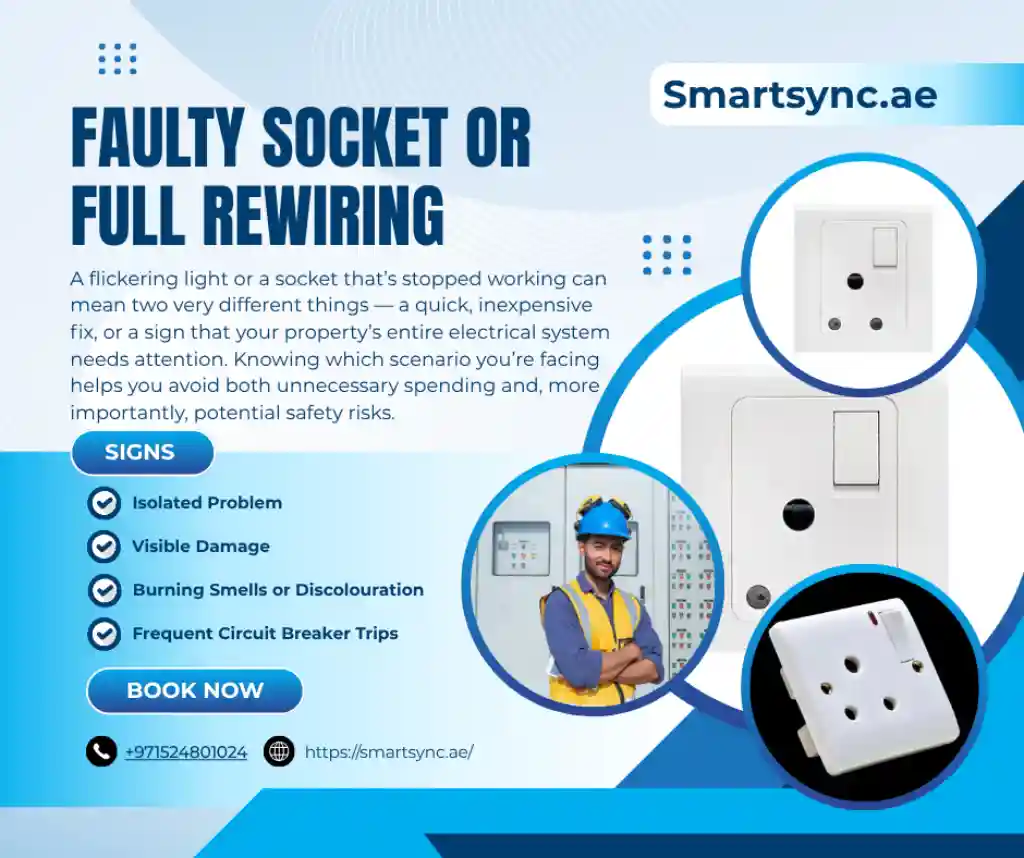
A flickering light or a socket that’s stopped working can mean two very different things — a quick, inexpensive fix, or a sign that your property’s entire electrical system needs attention. Knowing which scenario you’re facing helps you avoid both unnecessary spending and, more importantly, potential safety risks. Here’s how to tell the difference.
Signs You’re Likely Dealing With a Faulty Socket
Isolated Problem
If only one socket or switch is malfunctioning while everything else in the property works normally, it’s often an isolated issue rather than a system-wide problem.
Visible Damage
Cracked, discoloured, or loose sockets are usually straightforward to identify and repair without needing to investigate the broader wiring system.
Recent Onset
If a socket suddenly stops working after an appliance is plugged in, the cause is more likely to be a localised fault than ageing wiring.
Simple Trip Resets
If resetting the circuit breaker restores power to the affected socket without further issues, this suggests a contained problem rather than a widespread electrical fault.
Signs You May Need Full Rewiring
Frequent, Widespread Issues
If multiple sockets, switches, or circuits across the property experience problems — flickering lights, frequent trips, or intermittent power loss — this often points to deeper wiring issues rather than isolated faults.
Property Age
Older properties that have not been rewired for many years are more likely to have outdated wiring that no longer meets current safety standards or supports modern electrical demands.
Burning Smells or Discolouration
A persistent burning smell near outlets or visible scorch marks are serious warning signs that require immediate professional attention.
Frequent Circuit Breaker Trips
If your circuit breaker trips repeatedly across different circuits, rather than a single isolated one, this often signals that the electrical system is overloaded or deteriorating.
Renovation or Major Appliance Additions
If you’re planning a significant renovation or adding major appliances that increase electrical demand, older wiring may not be equipped to handle the additional load safely.
Why Getting This Right Matters
Safety Risks
Electrical issues should never be guessed at. Since faulty wiring is a leading cause of house fires, accurate diagnosis is essential.
Cost Implications
Treating a full rewiring need as a simple socket repair means the underlying problem persists, often leading to repeated call-outs and mounting costs over time. Conversely, unnecessarily rewiring when a simple fix would suffice wastes both money and time.
What a Professional Assessment Involves
A qualified electrician will typically test the affected socket or circuit, check the broader electrical panel, and assess wiring condition throughout the property if multiple issues are present. This diagnostic step is essential in determining whether you’re facing a contained fix or a larger project.
How to Choose the Right Electrician for the Job
Verify Licensing
Always confirm your electrician in dubai is properly licensed and experienced with both minor repairs and larger rewiring projects.
Ask for a Clear Diagnosis
A reputable electrician should explain exactly what they found and why they’re recommending a particular course of action, rather than jumping straight to the most expensive solution.
Get a Written Quote
For anything beyond a simple socket fix, request a detailed, written quote outlining the scope of work before committing.
Conclusion
Distinguishing between a faulty socket and the need for full rewiring depends on recognising key patterns, including whether the issue is isolated or widespread, the property’s age, and warning signs such as burning smells or frequent trips. When in doubt, a professional assessment is always worth the cost, given how much safety and long-term expense depend on getting this diagnosis right.